Couples Therapy
in person in Greenville, SC and online throughout South Carolina and Florida

You love each other, but it feels like you speak different languages.
Maybe you feel like you're the only one fighting for your relationship.
You try to express your needs, but somehow the conversation always ends with your partner becoming defensive, shutting down, or walking away.
You find yourself wondering...
"Why don't they care as much as I do?"
"Why do I always have to be the one bringing things up?"
"Why can't we just talk about it?"
The more disconnected you feel, the harder you try to reach them. And somehow, the harder you try, the further away they seem to get.
Or maybe you're on the other side of that cycle.
You love your partner deeply, but every difficult conversation leaves you feeling like you're failing. No matter what you say, it never feels like enough. You withdraw—not because you don't care, but because you don't know how to make it better, and you sure as hell don’t want to make things worse.
If either of these feels familiar...
You're not alone.
And you're not the only couple living this cycle.

My Approach
One of the biggest misconceptions about conflict is that it's caused by poor communication.
In my experience, that's rarely the real problem.
When we feel criticized, rejected, misunderstood, or emotionally alone, our nervous system senses a threat. Not necessarily a physical threat—but a threat to the relationship, our sense of safety, or the parts of us that have learned to protect ourselves.
That's when the armor comes on.
Some people fight harder. Others shut down. Some criticize. Others withdraw. Some try to fix everything, while others avoid the conversation altogether.
None of those reactions happen because you're trying to hurt each other.
They happen because you're trying to protect yourselves.
The problem is that your protection often becomes your partner's threat. Their defenses come up in response, and before you know it, the two of you are stuck in a cycle where neither person feels seen, heard, or understood.
My role isn't to decide who's right or wrong.
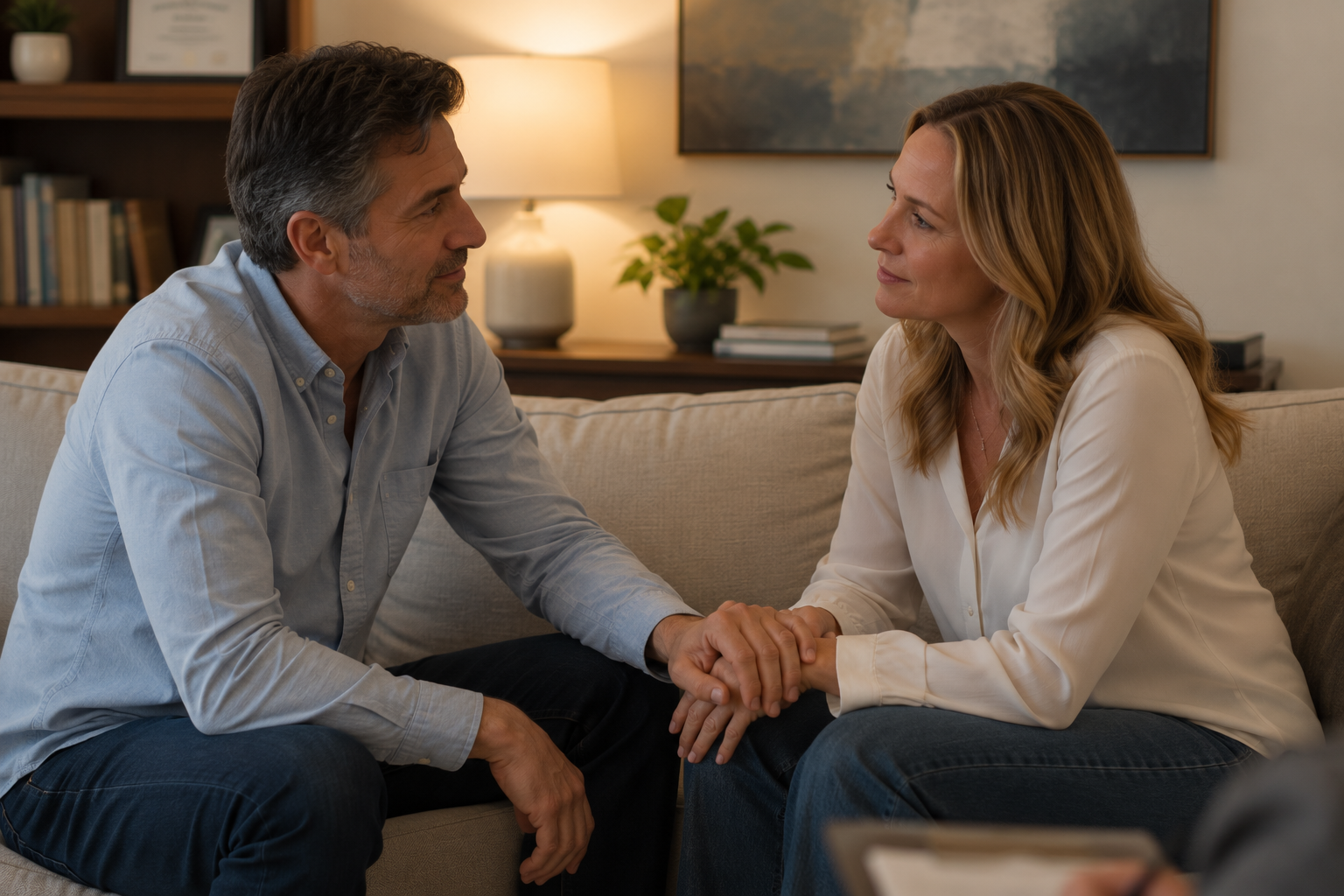
It's to help you understand what's happening underneath the conflict so you can recognize the cycle, put down your armor, and learn to face the problem together instead of facing each other.
Because the cycle is the enemy.
Not your partner.
What to Expect

Schedule a Phone Consultation
We'll start with a complimentary phone consultation to talk about what's been happening in your relationship, answer any questions you have, and determine whether I'm the right fit to help. This is a chance for both of us to get to know one another before beginning the therapy process.

Identify Your Patterns & the Why Behind Them
We'll begin by meeting together so I can understand your relationship and the cycle that's keeping you stuck. I'll also meet with each of you individually to learn more about your personal story, attachment style, family dynamics, trauma history, and the experiences that shaped how you learned to love, protect yourself, and show up in relationships. This helps us move beyond surface-level conflict and understand what's really happening underneath.
Connect On a Deeper Level
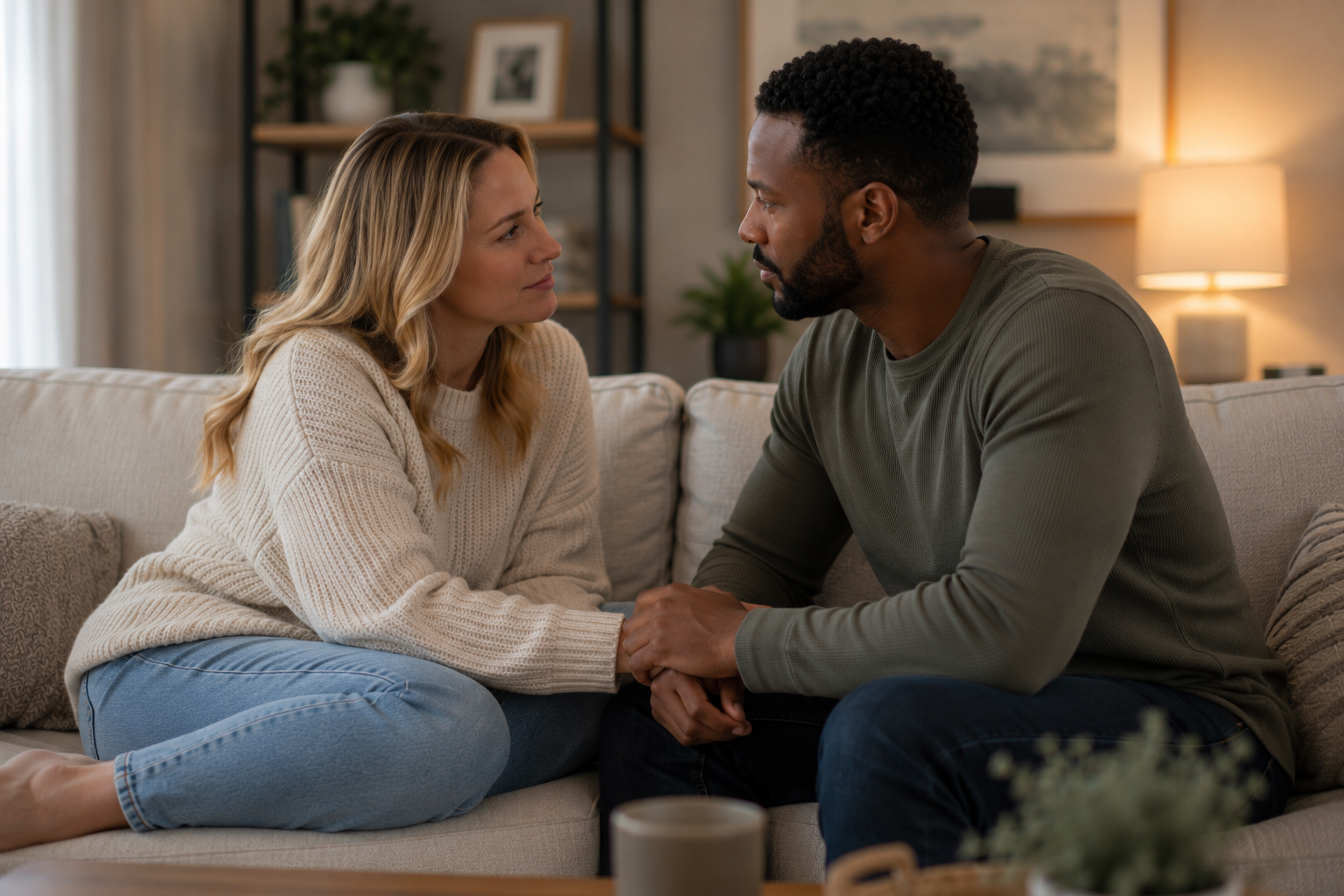
Once we understand the cycle that's keeping you stuck, we can begin creating new patterns together. You'll learn to recognize what's happening beneath the conflict, communicate from a place of vulnerability instead of protection, and build the emotional safety needed to reconnect, repair, and strengthen your relationship.
Frequently Asked Questions
-
Phone Consultations (15 min) are complimentary.
Couples Therapy is $250 and sessions are 50 minutes.
I do have a limited number of reduced fee spots. Feel free to inquire.
-
I do not accept insurance, and couples therapy is rarely covered by insurers because insurance requires a diagnosis in order to reimburse and having relational issues doesn’t constitute a mental health diagnosis.
-
I primarily use Emotionally Focused Therapy (EFT), an attachment-based approach that helps couples move beyond the surface of conflict and understand what's happening underneath it.
Rather than getting stuck debating who said what or who's right, we'll slow the conversation down and become curious about the emotions, attachment needs, fears, and protective patterns driving each person's reactions. As each partner begins to feel more deeply understood, it's easier to put down the armor, lean toward one another instead of away, and create the emotional safety needed for lasting change.
-
While I don't provide biblical or faith-based marriage counseling, I deeply respect the beliefs and values that are important to each couple. If your faith is an important part of your relationship, you're welcome to bring it into our work together, and we'll honor those beliefs throughout the therapy process.
At the same time, I strive to create a safe, welcoming, and affirming space for all couples, regardless of faith, background, or identity. My goal is to help you build a stronger, more secure relationship in a way that aligns with your values.
-
Meeting weekly or every other week is recommended.
Most couples fine weekly sessions most effective, as consistency helps us build momentum and create meaningful change.
As your relationship becomes more secure and the cycle begins to shift, we may transition to meeting less frequently based on your goals and progress.
-
Every relationship is unique, so there's no one-size-fits-all timeline. The length of therapy depends on many factors, including how long you've been stuck in the cycle, the goals you have for your relationship, and how consistently you're able to practice what you're learning between sessions.
Some couples experience meaningful shifts within 3-6 months, while others choose to continue longer as they deepen their connection and work through more complex relationship patterns.
-
No. My role isn't to decide who's right or wrong or determine who is to blame.
Instead, I work to understand each partner's experience and help you better understand one another. I believe that most couples aren't fighting because one person is "the problem"—they're stuck in a pattern that neither of them knows how to escape. Together, we'll learn to recognize that cycle so you can stop fighting each other and start working as a team.
-
It's very common for one partner to feel more hesitant about therapy than the other. Sometimes that's because they're skeptical, unsure what to expect, or worried they'll be blamed.
If your partner is open to having a conversation, I'd encourage them to join the consultation call. My goal is to create a space where both of you feel heard, understood, and respected. Couples therapy works best when each person is willing to be curious, even if they're feeling uncertain.
Ready to get started?
You don't have to settle for feeling disconnected. With greater understanding, emotional safety, and a willingness to lean toward one another, it's possible to build the kind of relationship you've both been longing for.
If you're ready to get started, you're welcome to schedule your virtual intake appointment online.
If you'd prefer to meet in person, we'll arrange that after we've connected by phone.